
Premier League badges are some of the most familiar in football, but many of their symbols go back much further than the league. Ships, castles and seahorses come from city coats of arms, animals come from nicknames, and stars mark European Cups.
Several clubs have changed their crests recently, so this guide describes the badges worn in the 2026–27 season and notes where a change is on the way.
The clubs below are the 20 teams in the 2026–27 season, in alphabetical order. Each entry says what is on the badge, when the current design arrived and one detail that helps in a quiz.
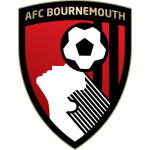
AFC Bournemouth
The silhouette of a player heading a ball has been on the badge since 1972 and honours Dickie Dowsett, a prolific scorer for the club in the 1950s and 1960s. The red and black stripes behind him come from the club’s striped shirt. The 2013 crest is an update of that 1972 design.
Quiz clue: A head in profile meeting a ball, in front of red and black stripes.

Arsenal
The cannon recalls the club’s founding in 1886 by workers at the Royal Arsenal in Woolwich, which also gave Arsenal its nickname. The 2002 redesign turned the cannon to face east, dropped the Latin motto and the Islington coat of arms from the older crest, and wrote the club name above in a plain typeface. In recent seasons the shirts have also carried the cannon on its own.
Quiz clue: One cannon pointing right, with ARSENAL written above it.

Aston Villa
The yellow lion rampant goes back to the club’s Scottish leaders William McGregor and George Ramsay, who put the Scottish lion on the shirts by 1880. The star above it marks the 1982 European Cup. The 2024 crest returned to a light blue shield and spells out the club name with the founding year, 1874.
Quiz clue: A yellow lion on its hind legs, a white star and “1874” on a light blue shield.

Brentford
The bee in the middle stands for the club’s nickname. The 2017 redesign simplified the previous badge into a double roundel, with the club name and the founding year, 1889, in white on the red outer ring.
Quiz clue: A round red badge with a large bee and the year 1889.

Brighton & Hove Albion
The seagull refers to a nickname the club has used since the 1970s. The 2011 crest, introduced for the move to the new stadium, brought back the round shape of the club’s 1970s badge, with a white gull in flight and the club name in blue and white.
Quiz clue: A round blue-and-white badge with a white seagull in flight.

Chelsea
The lion looking back over its shoulder comes from the arms of Viscount Chelsea, the club president when the design first appeared in 1953. Its staff comes from the Abbots of Westminster, once Lords of the Manor of Chelsea, and the red roses represent England. The 2005 crest brought back the 1953 lion. A flatter, darker version appeared on the 2026–27 shirts.
Quiz clue: A round blue badge with a lion looking backwards and holding a staff.

Coventry City
The elephant carrying a castle comes from Coventry’s coat of arms. The badge is built around the club’s sky blue, and the 2009 version tidies up a design from the 1980s.
Quiz clue: An elephant with a castle on its back, in sky blue.

Crystal Palace
The eagle stands for the nickname the club took in 1973, inspired by Benfica. Under it is the glass-and-iron Crystal Palace exhibition building that gave the club its name. In 2022 the founding year on the badge changed from 1905 to 1861, to honour the original Crystal Palace club.
Quiz clue: An eagle above a glass building, in red and blue, with the year 1861.

Everton
The tower is the Everton Lock-Up, an 18th-century building that still stands in the Everton district. It sits between two laurel wreaths, above the Latin motto “Nil satis nisi optimum”: nothing but the best is good enough. Fans chose this version in a vote after a 2013 redesign was rejected.
Quiz clue: A small round tower between two laurel wreaths, with a Latin motto.

Fulham
The linked letters FFC stand for Fulham Football Club. They are red on a black-and-white shield, the club’s colours. This crest replaced one based on the borough’s coat of arms.
Quiz clue: Red FFC letters on a black-and-white shield.

Hull City
The tiger’s head comes from the nickname, itself taken from the amber-and-black striped shirt. The 2019 crest put the words Hull City back on the badge after fans objected to their removal in 2014, with the founding year, 1904, below the tiger.
Quiz clue: A tiger’s head on an amber shield, with Hull City above it.

Ipswich Town
The white horse is a Suffolk Punch, a local breed of heavy working horse. The turrets above it represent Wolsey’s Gate, one of the town’s historic buildings, and the wavy lines stand for its waterways. The design began as a supporter’s competition entry in 1972.
Quiz clue: A white heavy horse with castle turrets above it.

Leeds United
The white rose is the White Rose of York, the symbol of Yorkshire. Below it, the letters LUFC run down the middle of a shield in the club’s blue, yellow and white.
Quiz clue: A white rose at the top of a shield, with LUFC written downwards.

Liverpool
The Liver bird, with seaweed in its beak, is the symbol of the city. The badge on the shirt since 2012 shows the bird above the letters L.F.C. The club’s full crest adds the Shankly Gates with “You’ll Never Walk Alone” and two flames for the Hillsborough memorial.
Quiz clue: A single bird with seaweed in its beak, above L.F.C.

Manchester City
The golden ship stands for Manchester’s trade and the Ship Canal. The three diagonal stripes are the rivers Irwell, Irk and Medlock, taken from the city’s arms, and the red rose represents Lancashire. The 2016 round badge was the first to show the founding year, 1894.
Quiz clue: A round badge with a gold ship, three diagonal stripes and a red rose.

Manchester United
The sailing ship comes from the city’s coat of arms. The red devil comes from the club’s nickname, borrowed from Salford’s rugby league team, and holds a trident. The 1998 update dropped the words Football Club from the banners.
Quiz clue: A red devil holding a trident, below a ship in full sail.

Newcastle United
The castle is the Norman keep that gave the city its name, and the two seahorses stand for Tyneside’s links with the sea. A lion holding a pennant stands on top. All three come from the city’s coat of arms, set against the black-and-white stripes of the shirt. The club revealed an updated crest in October 2026, due on the shirts from 2027–28.
Quiz clue: A castle between two seahorses on black-and-white stripes.

Nottingham Forest
The stylised tree refers to Sherwood Forest and the wavy lines below it to the River Trent. The two stars mark the European Cups of 1979 and 1980. The design won a 1973 competition and was drawn by a graphic design lecturer, David Lewis.
Quiz clue: A simple tree above wavy lines, with two stars.

Sunderland
The crest arrived with the move to the Stadium of Light. Its quartered shield shows the Penshaw Monument and the Wearmouth Bridge, with a colliery wheel above for the mine that once stood on the stadium site. Two black lions hold the shield, above the motto “Consectatio Excellentiae”: in pursuit of excellence.
Quiz clue: A quartered shield with a bridge and a monument, held by two black lions.

Tottenham Hotspur
The cockerel refers to Harry Hotspur, the nobleman the club is named after: fighting cocks wore spurs. The ball under its feet recalls the cockerel statue placed on White Hart Lane in 1909. Since November 2024 the cockerel has appeared on its own, without the club name around it.
Quiz clue: A slim cockerel standing on an old-fashioned ball, with no words.
Sources
Each entry was checked against the club’s official website or its Wikipedia article in October 2026. Crests are trademarks of their clubs and appear here only to identify them.
- AFC Bournemouth: en.wikipedia.org
- AFC Bournemouth: www.premierleague.com
- Arsenal: en.wikipedia.org
- Arsenal: www.premierleague.com
- Aston Villa: en.wikipedia.org
- Aston Villa: www.premierleague.com
- Brentford: en.wikipedia.org
- Brentford: www.premierleague.com
- Brighton & Hove Albion: en.wikipedia.org
- Brighton & Hove Albion: www.premierleague.com
- Chelsea: en.wikipedia.org
- Chelsea: www.premierleague.com
- Coventry City: en.wikipedia.org
- Coventry City: www.premierleague.com
- Crystal Palace: en.wikipedia.org
- Crystal Palace: www.cpfc.co.uk
- Everton: en.wikipedia.org
- Everton: www.premierleague.com
- Fulham: en.wikipedia.org
- Fulham: www.premierleague.com
- Hull City: en.wikipedia.org
- Hull City: www.premierleague.com
- Ipswich Town: en.wikipedia.org
- Ipswich Town: www.premierleague.com
- Leeds United: en.wikipedia.org
- Leeds United: www.premierleague.com
- Liverpool: en.wikipedia.org
- Liverpool: www.liverpoolfc.com
- Manchester City: en.wikipedia.org
- Manchester City: www.premierleague.com
- Manchester United: en.wikipedia.org
- Manchester United: www.premierleague.com
- Newcastle United: en.wikipedia.org
- Newcastle United: www.premierleague.com
- Nottingham Forest: en.wikipedia.org
- Nottingham Forest: www.premierleague.com
- Sunderland: en.wikipedia.org
- Sunderland: www.premierleague.com
- Tottenham Hotspur: en.wikipedia.org
- Tottenham Hotspur: www.tottenhamhotspur.com